
HelpKnow AI vs The AI Customer Experience Platform for Enterprise
Enterprise support leaders evaluating AI often face a choice between a focused AI agent platform and a broader customer experience suite. HelpKnow AI is an enterprise AI customer service agent platform that builds agents from your documents, FAQs, and product catalogs, then connects them to third-party support systems. The substitute, described as an AI customer experience and communications platform trusted by enterprises worldwide, takes a wider engagement and loyalty approach.
This comparison looks at how each option handles knowledge, actions, integration, and measurable outcomes, so you can decide which fits your support operation.
What each platform is built to do

The AI customer experience platform for enterprise product interface.
HelpKnow AI: an AI agent platform for customer service
HelpKnow AI focuses on building AI agents that understand your business and act on it. According to its documentation, the platform combines knowledge bases, tool plugins, and customer service collaboration systems across customer service, pre-sales, and internal assistant scenarios.
Key capabilities include:
- One-click agent creation with per-agent models, prompts, knowledge sources, and tools.
- Four knowledge types: online documentation, text documents, a structured product library, and Q&A documents.
- Tool plugins for Shopify, BigCommerce, and Shoplazza that handle order inquiries, order status tracking, and product search.
- Custom API tools so agents can call your own or third-party systems.
- Human handoff when confidence is low or a case is complex, with the AI context visible to human agents.
- Continuous learning where human follow-up answers feed back into the knowledge base.
HelpKnow AI claims more than 1,000 enterprise customers, a 70% reduction in customer service costs, and a 95% automated resolution rate. These are vendor claims, not independently verified figures, so treat them as directional.
The AI customer experience platform for enterprise: a broader CX suite
The substitute positions itself around engaging customers and improving loyalty, with AI as part of a wider customer experience and communications stack. That framing suits organizations that want one vendor for engagement channels, loyalty programs, and customer communications, rather than a dedicated agent-building platform.
The trade-off is depth. A broad CX suite may cover more channels and marketing-adjacent workflows, but the public positioning does not emphasize the same granular agent configuration, knowledge-source variety, or business-action plugins that HelpKnow AI documents.
Head-to-head comparison
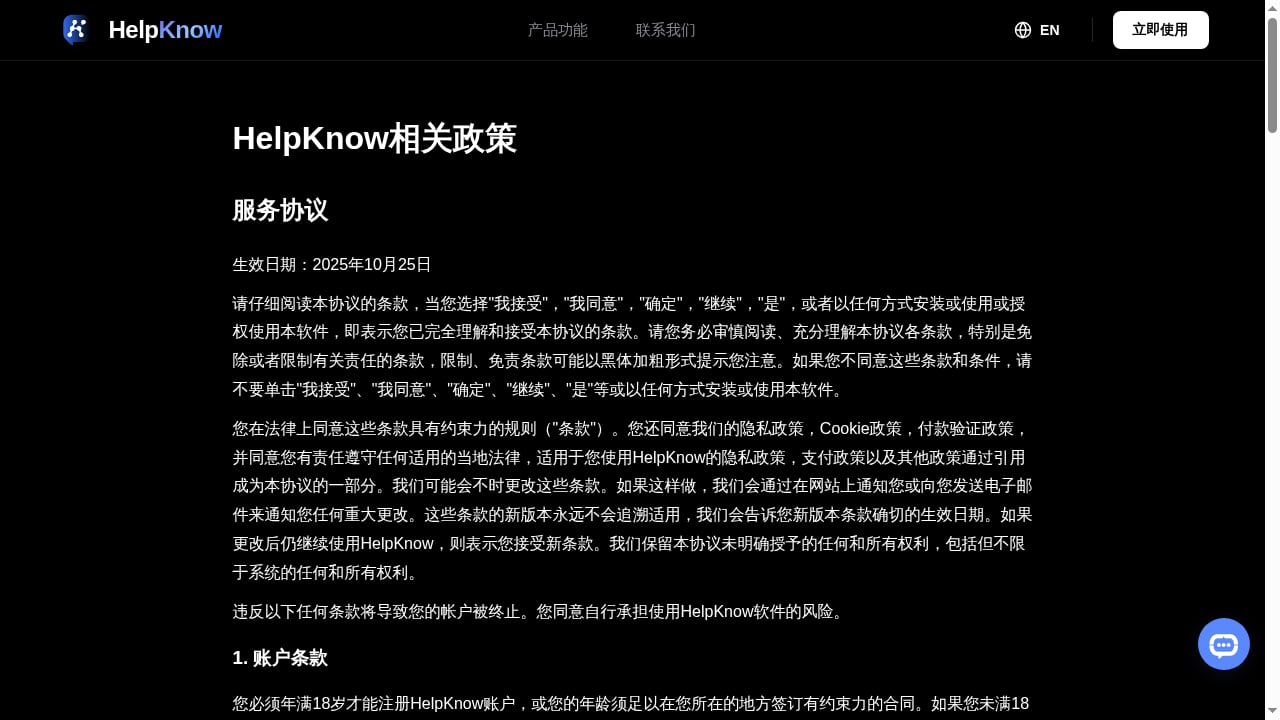
First viewport screenshot of www.helpknow.ai.
| Dimension | HelpKnow AI | The AI customer experience platform for enterprise |
|---|---|---|
| Primary focus | AI agents for customer service, pre-sales, and internal assistants | Customer engagement, loyalty, and communications |
| Agent configuration | Multiple agents with custom models, prompts, knowledge, and tools | Not detailed in available positioning |
| Knowledge sources | Online docs, text documents, product library, Q&A docs | Not detailed in available positioning |
| Business actions | Plugins for orders and products, plus custom API tools | Not detailed in available positioning |
| Human-AI collaboration | Low-confidence handoff with AI context and feedback loop | Not detailed in available positioning |
| Stated outcomes | 70% cost reduction, 95% automated resolution (vendor claims) | Not detailed in available positioning |
Where HelpKnow AI has a supported advantage
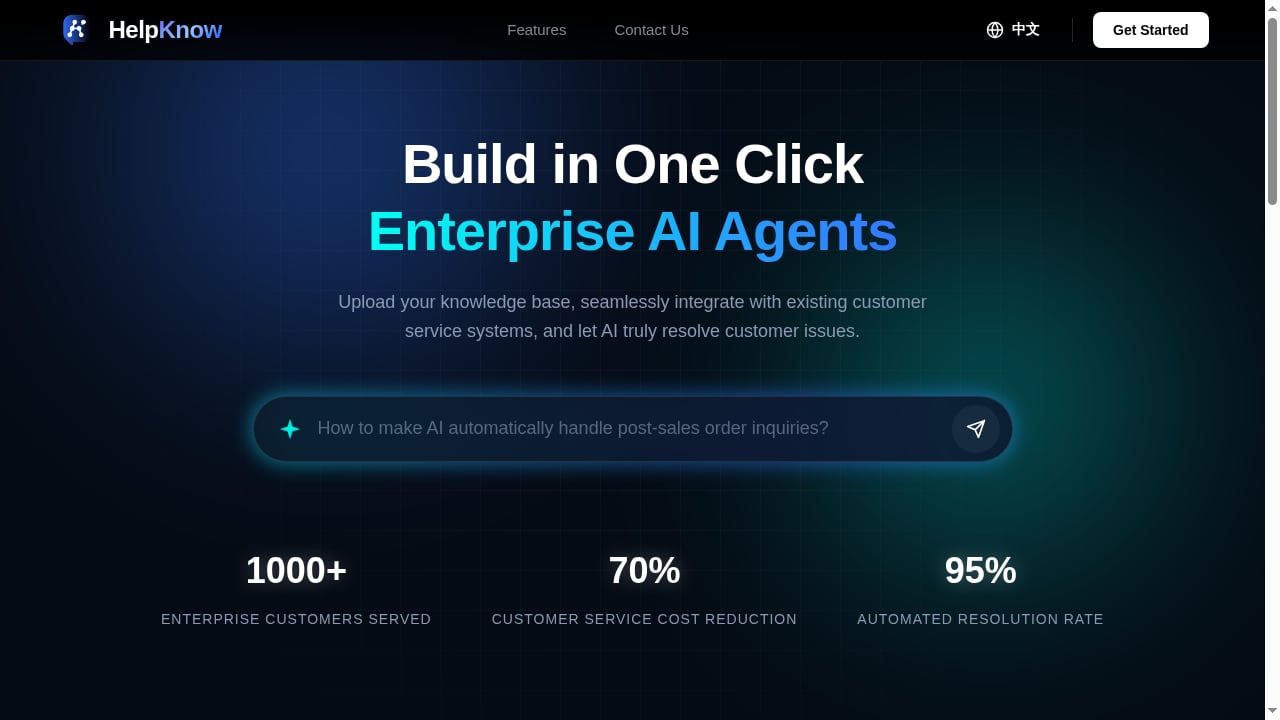
First viewport screenshot of www.helpknow.ai.
Knowledge ingestion is specific and multi-format
HelpKnow AI does not rely on a single FAQ upload. Its documentation describes four distinct knowledge types, including a structured product library that supports image-based product search and product card display. That matters for e-commerce and cross-border teams where customers send screenshots and ask, "Is this still in stock?"
A separate guide on building an AI knowledge base notes that pasting a link lets the system parse pages in under 30 seconds for most content, with longer documents taking up to five minutes, running in the background without interrupting live responses. That speed is a practical advantage when product launches or policy changes happen mid-day.
Agents can execute tasks, not just answer
HelpKnow AI's plugin system lets agents query order status, track logistics, and search products. The documentation gives a concrete example: a customer says they did not receive last week's order, the AI collects an order number, queries the order and logistics status, and replies with the result. That moves support from deflection to resolution.
Plugins support secure authentication, call logging, and quota control, which are the governance features enterprise buyers ask about before letting an AI touch order data.
Human handoff closes the learning loop
When confidence is low, HelpKnow AI transfers the conversation to a human agent who can see the AI's context and tool results. Human answers then feed back into the knowledge base. This closed loop is a meaningful differentiator because it turns every escalation into a training signal rather than a dead end.
Where the substitute may fit better
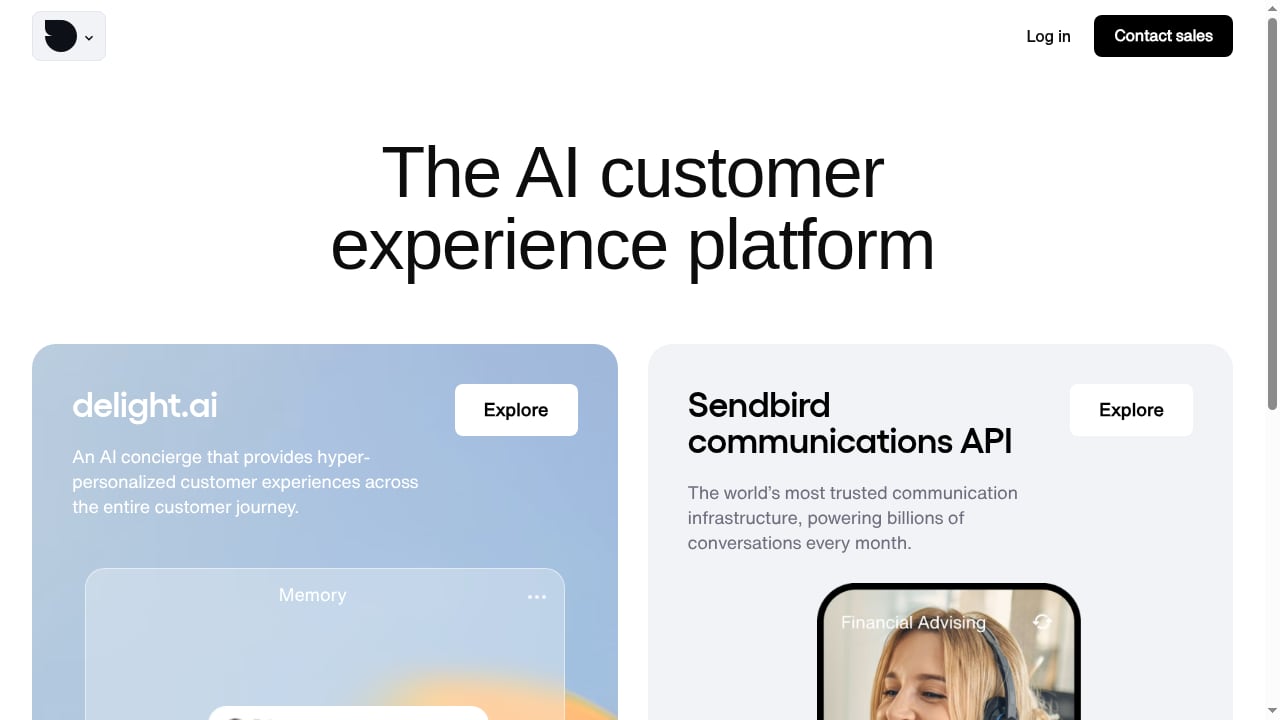
First viewport screenshot of sendbird.com.
A broad AI customer experience platform can be the right choice when your priority is a unified engagement and loyalty stack rather than a dedicated agent builder. If your organization already runs customer communications through a single suite and wants AI embedded in that suite, adding a separate agent platform may create integration overhead.
However, the available positioning for the substitute is high-level. It does not detail agent configuration, knowledge-source handling, or action plugins. Buyers should request a technical demo and ask specifically how the platform ingests product catalogs, whether agents can call order-management APIs, and how human handoffs preserve context.
Decision guidance
Choose HelpKnow AI when:
- Your support volume is dominated by order, product, and policy questions that require real actions.
- You need multiple agents segmented by region, language, or business module.
- You want to keep your existing support system and layer AI on top through integrations.
- You value a documented human-in-the-loop learning mechanism.
Choose the broader CX platform when:
- Customer loyalty and engagement workflows are the primary goal, with support as one component.
- You prefer consolidating vendors over best-of-breed tooling.
- Your team can validate the platform's AI depth through a technical evaluation.
For a wider view of the category, see our roundup of the top 10 AI-powered live chat and support software for 2026 and our comparison of HelpKnow AI vs Quidget vs Korra. If you are evaluating adjacent help desk options, the HelpKnow AI vs Kayako comparison covers automation depth in more detail.
Practical example: a returns question
A customer asks whether a product supports seven-day no-reason returns. A traditional knowledge base may be outdated if the policy changed that morning. With HelpKnow AI, a supervisor pastes the updated policy link, the system parses it, and the agent answers with the current rule. If the customer then asks about an existing order, the Shopify plugin retrieves the order status and the AI responds with both the policy and the order state in one conversation.
On a broad CX platform, the same flow depends on whether the platform exposes equivalent knowledge ingestion and order-action capabilities. That is the question to put to a sales engineer.
Related reading
- BoldDesk Review 2026: Autonomous AI Customer Service Software - Evidence-based BoldDesk review: autonomous AI agents, omnichannel support, pricing signals, setup effort, limitations, and who should choose it in 2026.
- How to Use HelpKnow AI with Dataiku: Setup & Workflow - Connect HelpKnow AI and Dataiku to close the loop between customer conversations and data science. Setup, workflow, examples, and best practices.
FAQ
Is HelpKnow AI a replacement for a full customer experience platform?
Not necessarily. HelpKnow AI is focused on AI agents for customer service, pre-sales, and internal assistants. A full CX platform may still handle engagement, loyalty, and communications. Many enterprises run both.
Can HelpKnow AI work with my existing support system?
Yes. HelpKnow AI integrates with third-party customer service systems and supports API and AI Search SDK integration with websites, malls, and backends.
How does HelpKnow AI handle questions it cannot answer?
Low-confidence or complex cases transfer to human agents, who can view the AI's context and call results. Human answers feed back into the knowledge base.
Are the 70% cost reduction and 95% resolution rate verified?
These are vendor claims. Ask for customer references and pilot results before using them in a business case.
What should I ask the substitute vendor?
Ask how it ingests product catalogs and policy documents, whether agents can execute order lookups, how human handoffs preserve context, and what governance exists for tool calls.
Conclusion
HelpKnow AI is the stronger fit when your goal is a purpose-built AI agent that learns your business and executes support tasks. The AI customer experience platform for enterprise is worth evaluating when loyalty and engagement consolidation matter more than agent depth. Run a pilot on your top 20 support intents, measure automated resolution and handoff quality, and let the results decide.
For background on how AI knowledge bases are built, see the step-by-step guide from SaleSmartly and the HelpKnow.ai documentation. For a view of agentic AI in enterprise commerce, the PROS discussion is a useful reference.