
HelpKnow AI vs IBM watsonx: Which AI Platform Fits Your Business?
Choosing between HelpKnow AI and IBM watsonx comes down to one core question: do you need a focused customer service AI agent that launches quickly, or a broad enterprise AI platform that requires technical resources to build custom solutions? Both tools bring serious AI capabilities, but they serve fundamentally different buyers and workflows.
HelpKnow AI is purpose-built for customer service teams that want to automate support conversations, reduce ticket volume, and resolve customer questions without writing code. IBM watsonx is a horizontal AI and data platform aimed at data scientists, AI builders, and IT leaders who want to train, govern, and deploy models across many business functions.
This comparison breaks down the key differences so you can decide which platform matches your team's skills, timeline, and goals.
What Is HelpKnow AI?
HelpKnow AI is an enterprise AI agent platform focused on customer service automation. Businesses use it to build, deploy, and manage intelligent support agents with minimal technical effort. The platform connects to existing support systems and knowledge bases, letting teams upload documents, FAQs, and product databases that the AI uses to generate responses automatically.
Key capabilities include multi-format data ingestion, AI-powered intent recognition for accurate query matching, and customizable AI personas that reflect your brand voice. The platform also provides conversation quality analytics with real-time monitoring, omni-channel integration across desktop, web, and social media, and role-based human escalation workflows.
HelpKnow AI reports adoption by over 1,000 enterprises, with a 70% reduction in customer service costs and a 95% automatic problem resolution rate. It maintains compliance with global data protection standards including GDPR and CCPA.
What Is IBM watsonx?
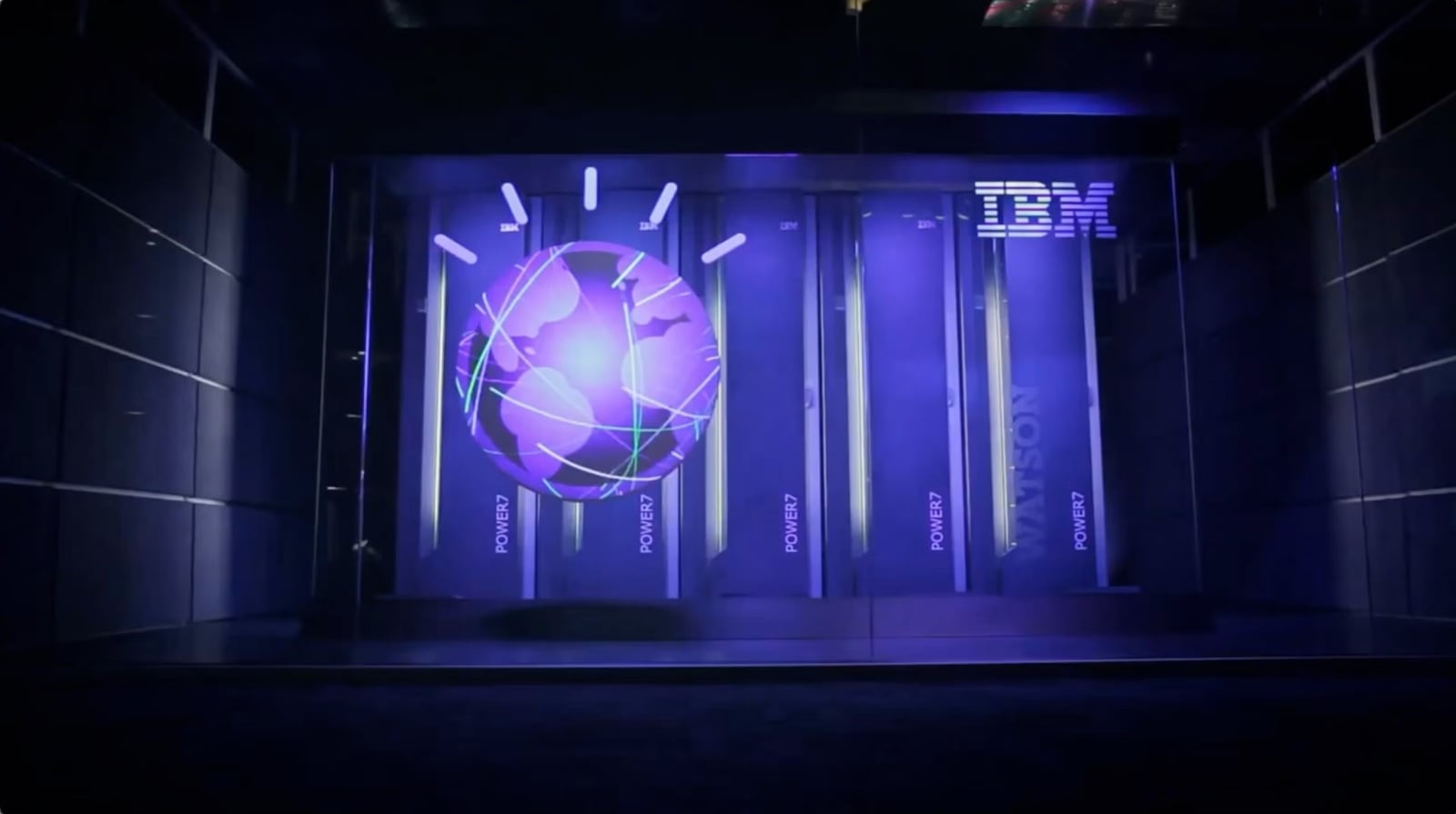
IBM watsonx product interface.
IBM watsonx is a comprehensive enterprise AI platform designed to accelerate generative AI across core business workflows. It targets data scientists, AI builders, developers, and business leaders with an integrated suite of tools for AI development, data management, governance, and automation.
The platform is organized around four main components:
- watsonx.ai for model training, tuning, and deployment
- watsonx.data for unified data access through a hybrid open data lakehouse
- watsonx.governance for governing AI models across their lifecycle
- watsonx Orchestrate for workflow automation with AI agents
IBM positions watsonx as a trusted, scalable solution for enterprises that want to operationalize AI responsibly. It emphasizes openness, hybrid deployment options, and enterprise-grade security. The platform is used across industries including financial services, healthcare, retail, and aerospace, with a strong focus on AI-native governance and GRC integration.
Head-to-Head Comparison

IBM watsonx product interface.
| Capability | HelpKnow AI | IBM watsonx |
|---|---|---|
| Primary focus | Customer service AI agents | General-purpose enterprise AI platform |
| Time to first AI agent | Days, minimal technical effort | Weeks to months, requires AI expertise |
| Target users | Support teams, CX leaders | Data scientists, AI builders, developers |
| Data ingestion | Documents, FAQs, product databases | Hybrid open data lakehouse, multi-source |
| Resolution automation | 95% automatic resolution rate | Depends on custom model configuration |
| Cost reduction proof point | 70% customer service cost reduction | Varies by deployment scope |
| Governance | GDPR, CCPA, global compliance | watsonx.governance, GRC integration |
| Omni-channel support | Desktop, web, social media | Depends on custom integrations |
| Human escalation | Role-based workflows built in | Requires workflow configuration |
| Analytics | Conversation quality, real-time monitoring | Model performance and governance dashboards |
Ease of Use and Time to Value

IBM watsonx product interface.
The most striking difference between these platforms is the path from purchase to production.
HelpKnow AI is designed for support leaders who need results without a data science team. You upload existing knowledge base content, connect your support channels, and the AI agent starts answering customer questions. The platform handles intent recognition and response generation automatically, and the 95% automatic resolution rate suggests the system works effectively out of the box for common support scenarios.
IBM watsonx takes a different approach. It gives technical teams granular control over model selection, training data, tuning parameters, and deployment environments. That control is powerful, but it requires specialized skills. A customer service leader without data science support would struggle to configure watsonx.ai for support automation, whereas HelpKnow AI removes that barrier entirely.
For a deeper look at how HelpKnow AI compares to other support-focused platforms, see our HelpKnow AI vs Tidio comparison and HelpKnow AI vs Help Scout analysis.
Customer Service Automation Depth
When it comes to customer service specifically, HelpKnow AI has a structural advantage: it was built for this use case from day one.
The platform's 95% automatic problem resolution rate is a meaningful proof point. It means the AI agent resolves the vast majority of customer inquiries without human intervention. Combined with the 70% cost reduction figure, this suggests HelpKnow AI delivers measurable ROI for support operations.
IBM watsonx can absolutely power customer service automation, but it requires assembly. You would need to combine watsonx.ai models with watsonx Orchestrate workflows, connect your knowledge sources through watsonx.data, and configure governance policies. The result can be powerful, but the burden of building and maintaining that system falls on your technical team.
HelpKnow AI also includes features that watsonx does not provide out of the box for support teams:
- Customizable AI personas that match your brand voice
- Role-based human escalation workflows built into the support flow
- Conversation quality analytics designed for support leaders, not data scientists
- Omni-channel integration across desktop, website, and social media without custom development
Governance and Compliance
Both platforms take data protection seriously, but they approach it from different angles.
HelpKnow AI ensures compliance with global standards including GDPR and CCPA as part of its core offering. For support teams handling customer data across regions, this built-in compliance reduces legal and operational friction.
IBM watsonx offers watsonx.governance, a dedicated component for governing AI models across their lifecycle. This includes model risk management, bias detection, explainability tools, and GRC integration. For heavily regulated industries like financial services and healthcare, this depth of governance is a significant advantage.
The trade-off is complexity. HelpKnow AI's compliance is automatic and invisible to the user. watsonx.governance requires configuration, policy definition, and ongoing management by governance specialists.
Deployment and Integration
HelpKnow AI integrates with existing customer support systems and knowledge bases. The platform supports multi-format data ingestion, meaning you can upload documents, FAQs, and product databases in various formats and the system handles the rest. This reduces the integration burden on IT teams.
IBM watsonx emphasizes hybrid deployment, allowing enterprises to run AI workloads on-premises, in the cloud, or in hybrid configurations. This flexibility matters for organizations with strict data residency requirements or existing IBM infrastructure investments. However, hybrid deployment also means more infrastructure decisions and maintenance responsibilities.
Analytics and Monitoring
HelpKnow AI provides conversation quality analytics with real-time monitoring. Support leaders can see how the AI agent is performing, identify conversation patterns, and spot areas where human intervention is needed. The analytics are designed for operational decision-making.
IBM watsonx focuses on model performance metrics, data lineage, and governance dashboards. These analytics are valuable for AI teams managing model drift, bias, and compliance, but they are less directly useful for a support manager trying to improve customer satisfaction scores.
Who Should Choose HelpKnow AI?
HelpKnow AI is the better fit when:
- Your primary goal is customer service automation, not general AI experimentation
- You lack a dedicated data science team but still want enterprise-grade AI
- You need results in days or weeks, not months
- Your support volume is high and you want to reduce ticket load quickly
- You need omni-channel support across web, desktop, and social media without custom development
- Compliance with GDPR and CCPA is a requirement, not a nice-to-have
If you are evaluating support platforms more broadly, our HelpKnow AI vs Genesys Cloud comparison and HelpKnow AI vs Kustomer vs Helpshift analysis provide additional context.
Who Should Choose IBM watsonx?

IBM watsonx product interface.
IBM watsonx is the better fit when:
- You need a general-purpose AI platform for multiple use cases beyond customer service
- You have data scientists and AI engineers on staff who can build custom solutions
- You require deep AI governance with model risk management and GRC integration
- You operate in heavily regulated industries like financial services or healthcare
- You need hybrid deployment across on-premises and cloud environments
- You already use IBM infrastructure and want to consolidate your AI stack
The Bottom Line
HelpKnow AI and IBM watsonx are not direct competitors in the traditional sense. They occupy different layers of the enterprise AI stack.
HelpKnow AI is a focused application layer solution: it solves a specific business problem — customer service automation — with minimal technical overhead and proven results. The 95% resolution rate and 70% cost reduction figures demonstrate that focus pays off for support operations.
IBM watsonx is a platform layer solution: it provides the tools for enterprises to build many different AI applications, including customer service, but it requires technical investment to realize that potential.
For most customer service teams, HelpKnow AI delivers faster time to value, lower technical barriers, and more relevant out-of-the-box features. For enterprises building a broad AI capability across multiple business functions, watsonx offers the flexibility and governance depth that a general-purpose platform provides.
Learn more about IBM watsonx on the official IBM watsonx page and explore IBM's AI governance approach for additional context.
Related reading
- Dialpad Review 2026: AI Contact Center & VoIP Verdict - Evidence-based Dialpad review covering AI agents, contact center features, VoIP pricing, setup, limitations, and who should choose it in 2026.
Sources and further reading
- Joanna Raitano - Vice President, Ecosystem Sales, Americas at IBM - Joanna Raitano is a technology executive with more than 20 years of experience in a… · Experience: IBM · Education: Rutgers University-New Brunswick · Location: Wake Forest · 500+ connections on LinkedIn. View Joanna Raitano’s profile on LinkedIn, a professional community of 1 billion members.
- Where can I find the best resume-writing service? - Quora - Answer (1 of 4): Start by using your intelligence to determine what is true, what is a good value for your money, and what will benefit you the most.
How to Avoid Resume Scams
Your career is one of the most valuable assets you will own and your resume is the key to opening doors to maximizing y...
- Yannick Aaron Lehr - EMPA - Expert for Data Strategy and Web ... - EMPA - Expert for Data Strategy and Web-Software Development, Data Consultant/Data Scientist/FullStack Developer, specialised on AI supported Business ...
Frequently Asked Questions
Is HelpKnow AI easier to implement than IBM watsonx?
Yes. HelpKnow AI is designed for minimal technical effort, allowing support teams to upload knowledge bases and deploy AI agents in days. IBM watsonx requires data science expertise and configuration across multiple components, which typically takes weeks to months.
Can IBM watsonx do everything HelpKnow AI does?
Technically, watsonx can be configured to power customer service automation, but it requires assembling multiple components and building custom workflows. HelpKnow AI provides these capabilities natively, including intent recognition, AI personas, and human escalation workflows.
Which platform has better customer service resolution rates?
HelpKnow AI reports a 95% automatic problem resolution rate based on its deployed customer service agents. IBM watsonx does not publish a comparable resolution rate because its performance depends on how each enterprise configures its models and workflows.
Does IBM watsonx offer better governance than HelpKnow AI?
IBM watsonx offers more granular AI governance through watsonx.governance, including model risk management and GRC integration. HelpKnow AI provides data protection compliance with GDPR, CCPA, and other global standards as a built-in feature, which is sufficient for most customer service use cases.
Which platform costs less?
HelpKnow AI's 70% customer service cost reduction suggests strong ROI for support operations. IBM watsonx pricing varies significantly based on deployment scope, infrastructure choices, and the technical resources required to build and maintain custom AI solutions.
Conclusion
The choice between HelpKnow AI and IBM watsonx ultimately depends on what you are trying to accomplish. If you want to automate customer service now, reduce support costs, and resolve customer questions at scale without building a data science team, HelpKnow AI is the more direct path. If you are investing in a long-term, enterprise-wide AI capability with deep governance requirements and have the technical talent to support it, IBM watsonx offers a powerful foundation.
For most support leaders, the decision is straightforward: choose the platform that solves your problem today, not the one that requires you to build the solution yourself.