
Crescendo Review 2026: AI-Native CX Platform, Features, and Real Verdict
Crescendo takes a different approach to customer experience software. Instead of bolting AI onto a legacy ticketing system, it builds the entire stack around AI from the ground up. The pitch is simple: replace fragmented support tools with one AI-native platform that resolves more inquiries instantly, responds faster, and goes live in under 30 days. But does the reality match the ambition? This review breaks down what Crescendo actually does, who it fits best, where it falls short, and how to decide if it deserves a spot in your CX stack.
What Is Crescendo?
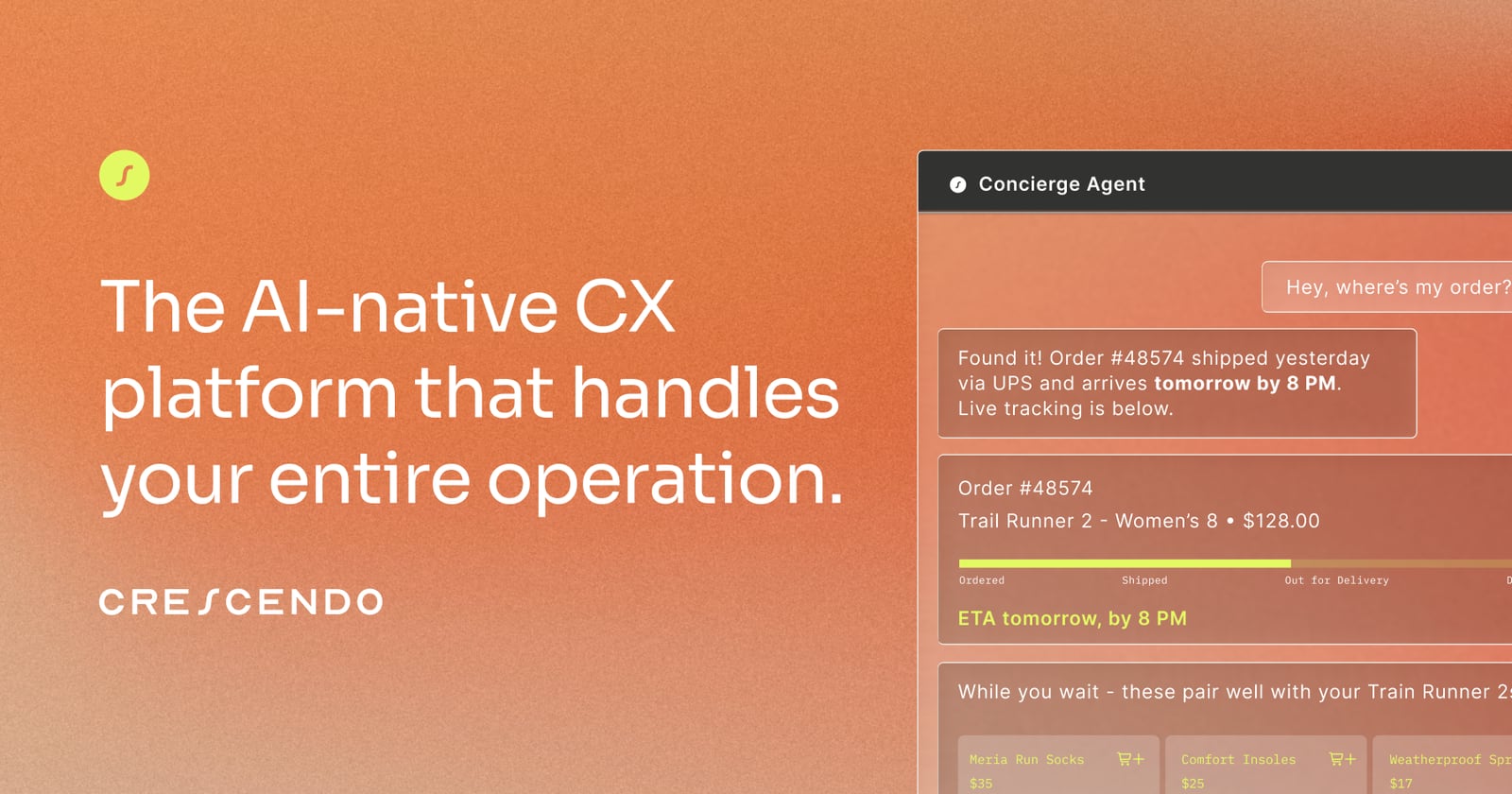
Crescendo.ai: AI-native customer experience platform.
Crescendo is an AI-native customer experience platform designed to replace traditional support stacks. It combines AI-powered automation with human oversight to deliver customer service across all channels—chat, email, and more—without requiring teams to juggle separate help desk, chatbot, and knowledge base tools.
The platform positions itself as a unified alternative to fragmented CX stacks. Rather than layering an AI assistant on top of existing software, Crescendo treats AI as the core operating layer. Human agents step in for escalations, edge cases, and quality control, while the AI handles the high-volume, repetitive work that typically clogs queues.
Crescendo reports several performance benchmarks from deployments: 95%+ accuracy, 75% CSAT, 50% more inquiries resolved instantly, and a 99.93% faster email response time. Those numbers are vendor-reported, so treat them as directional rather than guaranteed. Still, they point to the platform's core value proposition: speed and deflection at scale.
Who Is Crescendo For?
Crescendo targets teams that have outgrown basic chatbots but don't want the operational burden of managing a complex, multi-vendor CX stack. The ideal profile includes:
- Scaling SaaS and ecommerce companies with large user bases and repetitive support questions
- Support teams buried in ticket backlogs that need rapid deflection without hiring proportionally
- Businesses with seasonal surges that need to absorb volume spikes without temporary staffing
- Product-led companies preparing for launches that expect a flood of new-user questions
- Global brands that need consistent multilingual support without building separate teams for each language
If you're a small team with low ticket volume and simple needs, Crescendo may be more platform than you require. A lightweight live chat tool or shared inbox might serve you better at that stage. Crescendo earns its keep when volume, complexity, or language coverage create real operational pain.
Core Crescendo Features
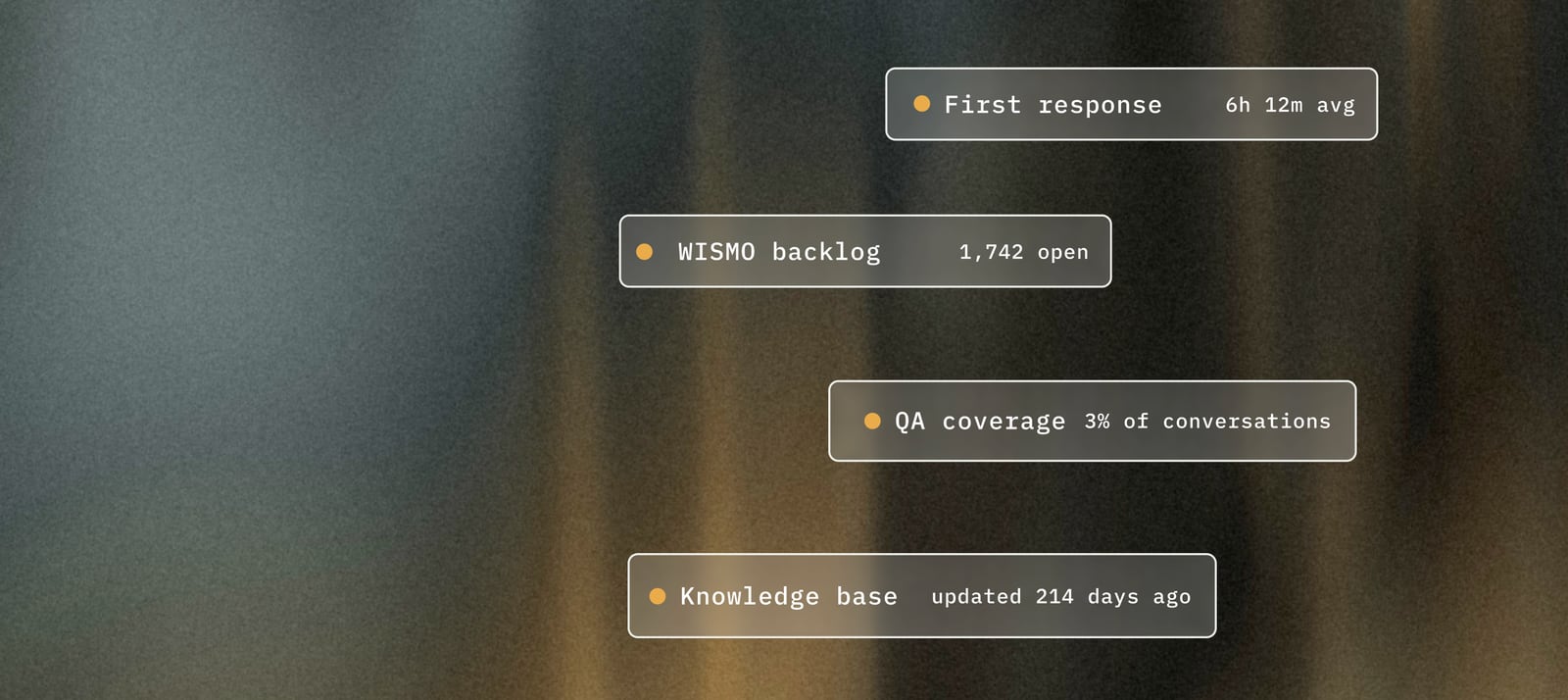
Specialized CX Agents working together, 24/7.
AI Live Chat Assistant
Crescendo's live chat assistant handles customer conversations in real time, using your knowledge base, product data, and historical conversations to generate accurate answers. The goal is human-like interaction that resolves issues without making customers feel like they're talking to a rigid decision tree.
The assistant escalates to human agents when confidence drops or when a conversation requires judgment, empathy, or account-specific action. This hybrid model is the key differentiator from first-generation chatbots that either deflect everything poorly or escalate everything uselessly.
AI Shopping Assistant
For ecommerce teams, Crescendo offers a shopping assistant designed to guide buyers through product discovery, comparisons, and purchase decisions. It can answer questions about sizing, shipping, returns, and product compatibility while maintaining the brand's voice.
This use case extends beyond support into revenue generation. A well-calibrated shopping assistant can reduce cart abandonment caused by unanswered questions and help customers find the right product faster.
Multilingual Support
Crescendo provides multilingual support without requiring separate bot configurations or translation middleware for each language. The AI can respond in the customer's language while maintaining consistent answers across markets. This is particularly valuable for companies expanding internationally but lacking the budget to staff native-language support teams in every region.
Human Oversight and Calibration
Crescendo emphasizes that AI doesn't run unsupervised. A dedicated team helps keep the system calibrated, reviewing edge cases, refining answers, and adjusting escalation rules. This managed component addresses one of the biggest failure modes of AI support: drift. Without ongoing tuning, AI assistants gradually become less accurate as products, policies, and customer questions evolve.
Key Use Cases
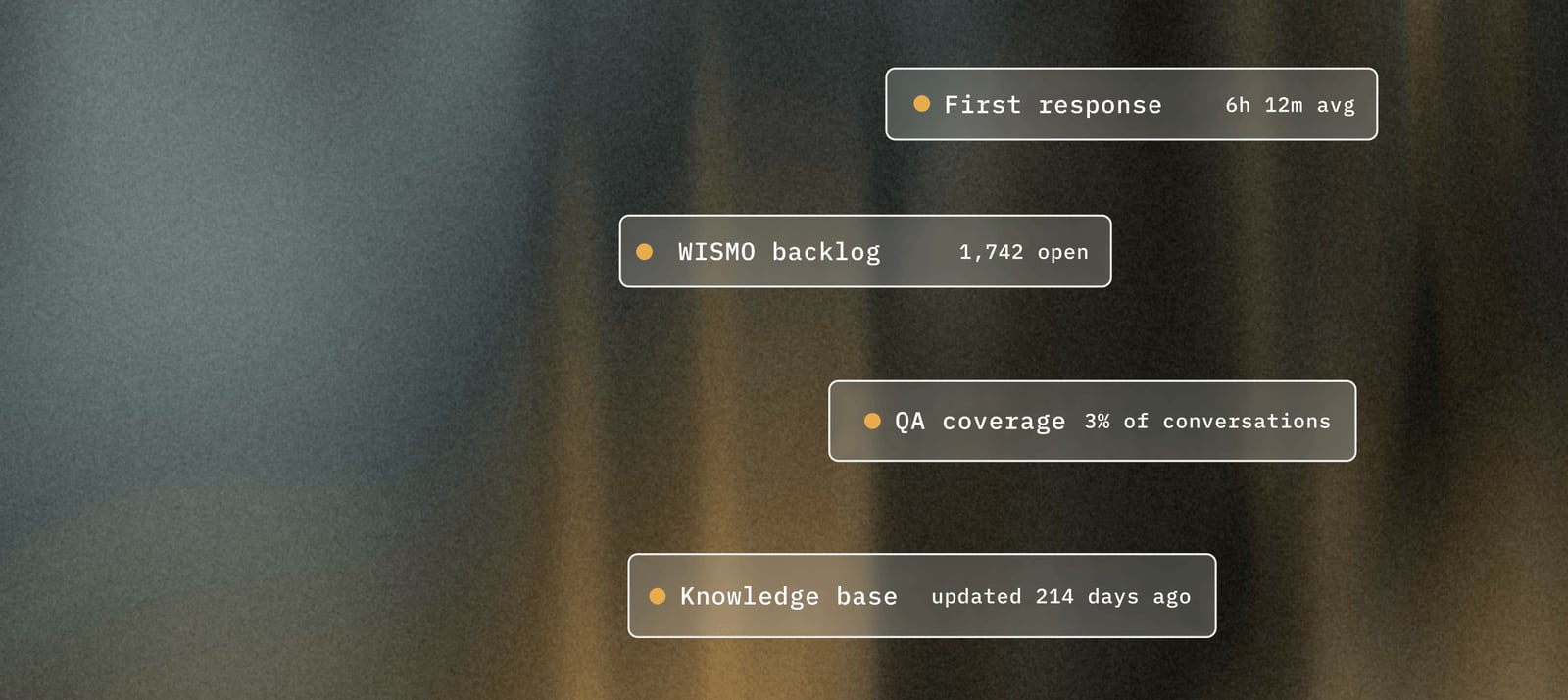
Specialized CX Agents working together, 24/7.
Clearing Ticket Backlogs
One of Crescendo's most compelling use cases is backlog reduction. Teams that have accumulated thousands of unanswered tickets can deploy Crescendo to triage and resolve the repetitive portion quickly. The AI handles password resets, order status inquiries, billing questions, and other high-frequency issues, while humans focus on the complex cases that actually require their expertise.
Scaling Support Without Linear Hiring
Traditional support scaling means hiring more agents as volume grows. Crescendo offers a different curve: the AI absorbs a larger share of volume, so headcount grows more slowly. This doesn't eliminate the need for human agents—it changes their role from first-line responders to escalation specialists and quality reviewers.
Handling Seasonal Surges
Retailers, travel companies, and tax software providers all face predictable volume spikes. Crescendo can absorb surge traffic without the costly cycle of hiring and laying off seasonal staff. The AI scales instantly, while human agents handle the overflow that genuinely needs a person.
Supporting Product Launches
New product launches generate a flood of questions from both new and existing customers. Crescendo can be trained on launch documentation and product data before the release date, providing immediate coverage from day one. This reduces the post-launch support crunch that often overwhelms small teams.
Strengths of Crescendo
Unified Platform Reduces Tool Sprawl
The biggest structural advantage is consolidation. Many CX stacks involve five or more tools: help desk, live chat, chatbot, knowledge base, CRM integration, and analytics. Crescendo replaces much of that with a single platform. Fewer tools means fewer integrations to maintain, fewer data silos, and a simpler onboarding process for agents.
Fast Deployment
Crescendo claims live deployment in under 30 days. For an AI platform with this much capability, that's an aggressive timeline. It suggests the onboarding process is well-structured and that the calibration team does much of the heavy lifting. For teams that have been burned by six-month enterprise software implementations, this is a meaningful differentiator.
Strong Deflection Metrics
The reported 50% instant resolution rate and 99.93% faster email response times are impressive if they hold up in real-world conditions. Even if your results land below vendor benchmarks, a platform that resolves a third of inquiries instantly would transform most support operations.
Human-Like Interaction Quality
Crescendo's emphasis on human-like interactions addresses the biggest complaint about AI support: robotic, unhelpful responses. The platform's calibration process and hybrid escalation model are designed to avoid the frustrating loops that damage brand perception.
Limitations and Considerations
Pricing Transparency
Crescendo does not publish pricing. This is common for enterprise-focused CX platforms, but it makes evaluation harder for smaller teams. You'll need to request a demo and quote to understand whether the platform fits your budget. Based on the feature set and managed calibration component, expect pricing to be higher than self-serve tools like basic live chat software, but potentially lower than the total cost of a fragmented stack with multiple vendors.
AI Dependence Creates New Risks
An AI-native platform concentrates risk in the AI layer. If the AI gives wrong answers, the impact is broader than a single chatbot failure. Crescendo's human oversight mitigates this, but teams should still plan for quality monitoring and escalation workflows. AI support requires trust, and trust requires consistent accuracy over time.
Less Control for Highly Customized Workflows
Teams with deeply customized support workflows, complex SLA structures, or industry-specific compliance requirements may find Crescendo's unified approach constraining. Traditional platforms like Kustomer offer deeper CRM and workflow customization, which matters for regulated industries or enterprise service organizations.
Not a Fit for Low-Volume Teams
If you receive 50 tickets a month, Crescendo is overkill. The platform's value scales with volume. Small teams should consider simpler alternatives like Tidio, which offers AI features in a more accessible package for low-volume use cases.
Setup and Implementation
Crescendo's setup process centers on connecting your knowledge sources and calibrating the AI to your specific context. The typical implementation involves:
- Knowledge ingestion: Importing help center articles, product documentation, FAQs, and historical ticket data
- Brand voice configuration: Setting tone, formality, and response style preferences
- Channel integration: Connecting chat, email, and other customer touchpoints
- Escalation rules: Defining when the AI should hand off to human agents
- Calibration period: Running the system with human review before full automation
The under-30-days deployment claim assumes your team can provide clean knowledge sources and make decisions quickly. Teams with messy documentation or unclear escalation policies will take longer.
Crescendo vs. Alternatives

First viewport screenshot of Crescendo.ai: AI-native customer experience platform.
Crescendo vs. Traditional Help Desk + Chatbot Stacks
The traditional approach pairs a help desk like Zendesk or Freshdesk with a separate chatbot and knowledge base. This offers flexibility and a mature ecosystem, but requires managing multiple tools, integrations, and data flows. Crescendo trades some of that flexibility for simplicity and deeper AI integration. If you value customization and have the resources to manage a multi-tool stack, the traditional route still works. If you want faster deployment and less operational overhead, Crescendo's unified model is compelling.
Crescendo vs. AI-Enhanced Existing Platforms
Platforms like Udesk and HelpKnow AI offer AI features layered onto existing support infrastructure. These can be good options for teams that want AI capabilities without replacing their entire stack. Crescendo's advantage is architectural: because AI is the foundation rather than an add-on, the system can be more deeply integrated. The trade-off is that you're committing to Crescendo's platform rather than enhancing tools you already use.
Crescendo vs. Enterprise AI Platforms
For large enterprises with complex AI needs beyond customer support, platforms like IBM watsonx offer broader AI capabilities, including model development and governance. Crescendo is more focused: it solves the customer experience problem specifically, without requiring data science resources. If you need a general-purpose AI platform, watsonx is the better fit. If you need customer support solved quickly, Crescendo is more direct.
Decision Criteria: Should You Choose Crescendo?
Consider Crescendo if:
- Your support volume is high and growing, and hiring isn't keeping pace
- You're managing multiple CX tools and want to consolidate
- You need multilingual support without building separate teams
- You have a product launch or seasonal surge on the horizon
- Your team can commit to a 30-day implementation with clean knowledge sources
Look elsewhere if:
- Your ticket volume is low and a simple chat tool would suffice
- You need deep CRM integration or highly customized workflows
- You have strict compliance requirements that demand granular control over AI behavior
- You prefer to enhance existing tools rather than replace your stack
For teams evaluating AI knowledge management alongside support automation, our top AI knowledge base software comparison provides additional context on how Crescendo's approach fits the broader landscape.
Related reading
- Top 10 AI-Powered Team Collaboration Platforms 2026 - Compare the 10 best AI-powered team collaboration and productivity platforms for 2026 on AI features, integrations, pricing, and ideal use cases.
Sources and further reading
- ‘Crescendo’ review: A French opera is rocked by scandal in Agnès Jaoui’s tone-deaf #MeToo satire - Daniel Auteuil, Vincenzo Amato and Claire Chust star alongside Jaoui in blunt Cannes Out Of Competition premiere
- Song Review: NMIXX – Crescendo - Fresh off the massive success of last year’s Blue Valentine, NMIXX are gearing up for its follow-up album. That album is set to release next month, but they’ve started its campaign earl…
- Review of CRESCENDO (2019) (Blu-ray) - Grade: B Drama Not rated (would be PG-13) When this 2019 German film debuted at the Munich International Film Festival, the audience gave it a standing ovation. I’m not surprised. The film tells th…
FAQ
What is Crescendo?
Crescendo is an AI-native customer experience platform that combines AI-powered automation with human oversight to deliver customer service across all channels. It replaces traditional support stacks with a unified, AI-driven solution.
How fast can Crescendo be deployed?
Crescendo claims live deployment in under 30 days. Actual timelines depend on the quality of your knowledge sources and how quickly your team can make configuration decisions.
Does Crescendo replace human support agents?
No. Crescendo automates high-volume, repetitive inquiries and escalates complex or sensitive conversations to human agents. The platform is designed for human oversight, not full replacement.
What channels does Crescendo support?
Crescendo supports live chat, email, and other customer touchpoints. The platform is designed to provide consistent AI-driven service across all channels.
Does Crescendo publish pricing?
No. Crescendo does not publish pricing publicly. You'll need to request a demo and quote to understand the cost for your specific use case.
What results does Crescendo report?
Crescendo reports 95%+ accuracy, 75% CSAT, 50% more inquiries resolved instantly, and 99.93% faster email response times. These are vendor-reported benchmarks and may vary by deployment.
Is Crescendo suitable for small businesses?
Crescendo is best suited for teams with meaningful support volume. Small businesses with low ticket counts may find simpler, more affordable tools sufficient for their needs.
Conclusion
Crescendo makes a strong case for the AI-native approach to customer experience. The unified platform, fast deployment, and managed calibration address real pain points that fragmented CX stacks create. The reported metrics—50% instant resolution, near-instant email responses, 95%+ accuracy—would be transformative for most support teams if achieved consistently.
The main caveats are familiar ones for enterprise software: opaque pricing, platform lock-in, and the inherent risk of concentrating customer interactions in an AI layer. Teams that need deep customization or operate in highly regulated environments should evaluate carefully.
For scaling companies that want to clear backlogs, absorb surges, and support launches without linear hiring, Crescendo deserves a serious look. Request a demo with your actual support data, test the AI against your real customer questions, and measure the results before committing. That's the only way to know if Crescendo's promises hold up in your specific context.