
HelpKnow AI vs Salesforce Agentic CRM vs Retell AI
Choosing an AI platform for customer service in 2026 means deciding how much of your stack you want to own. Salesforce Agentic CRM offers deep integration with the world's most widely used CRM. Retell AI gives developers a modular, API-first voice stack. HelpKnow AI focuses on fast deployment of enterprise AI agents that resolve customer questions across channels without heavy engineering work.
This comparison looks at where each platform is genuinely strong, and where HelpKnow AI is the better fit. It is written for teams that need to pick a direction, not collect feature lists.
Quick comparison: what each platform is built for
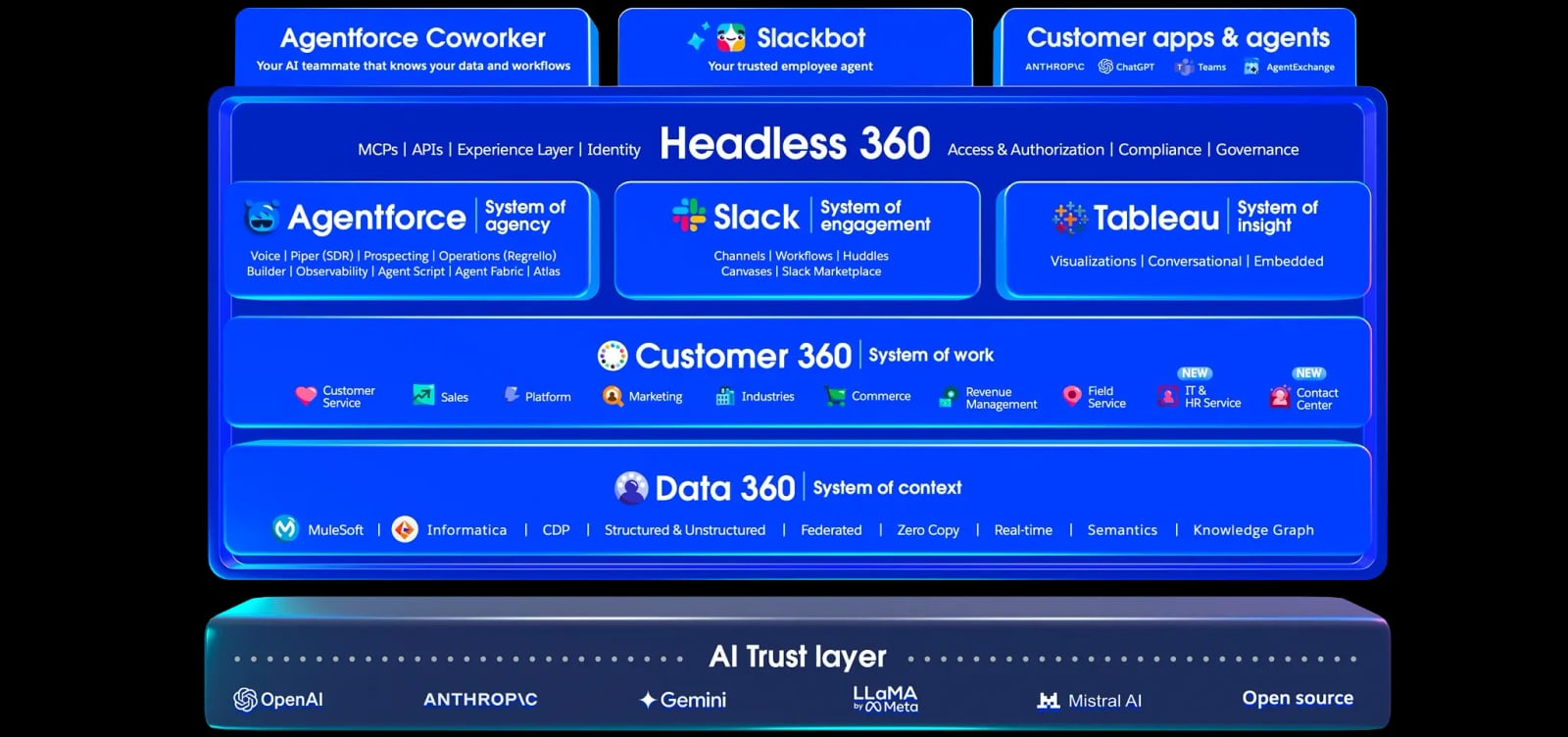
Salesforce Agentic CRM product interface.
| Platform | Core strength | Typical buyer |
|---|---|---|
| HelpKnow AI | Enterprise AI customer service agents with minimal technical effort | Support and CX teams that need fast time-to-value |
| Salesforce Agentic CRM | Agentic AI embedded in CRM data and workflows | Organizations already standardized on Salesforce |
| Retell AI | Production-ready AI voice agents for call centers | Developer-led teams automating phone conversations |
Each platform can be the right answer. The deciding factors are usually deployment effort, channel coverage, how you measure quality, and how much control you need over the underlying stack.
Salesforce Agentic CRM: strengths worth taking seriously
Salesforce Agentic CRM product interface.
Salesforce positions Agentic CRM as a way to become an "Agentic Enterprise" where humans and AI agents work in the same system. That positioning is backed by real advantages.
Deep CRM context. Because agents operate inside Salesforce, they can draw on Customer 360 data, service history, and account records without building custom data pipelines. As Salesforce Ben's analysis of Agentforce notes, embedding AI in the CRM means agents work with rich, contextual customer data and fit into existing user workflows rather than requiring a separate login or tab.
Trust and security infrastructure. Salesforce applies encryption, access controls, threat detection, and its Einstein Trust Layer to guard against data leakage and harmful outputs. For regulated industries, that existing security posture is a meaningful head start.
Ecosystem and enablement. Sandboxes, Success Plans, the AgentExchange partner marketplace, and the Trailblazer Community give Salesforce customers extensive support for building and extending agents. Salesforce reports 83% ROI for Signature Success Plan customers, and Vercel saved over 70,000 meeting hours using Slack agents.
Where the tradeoffs appear. Agentforce is tightly coupled to the Salesforce ecosystem. Connecting to external systems generally requires custom development and maintenance. The platform also carries a per-conversation cost that makes use-case design important, and heavy configuration through Data Cloud can slow teams down. These are not flaws so much as consequences of choosing a deep, platform-native approach.
Retell AI: strengths worth taking seriously
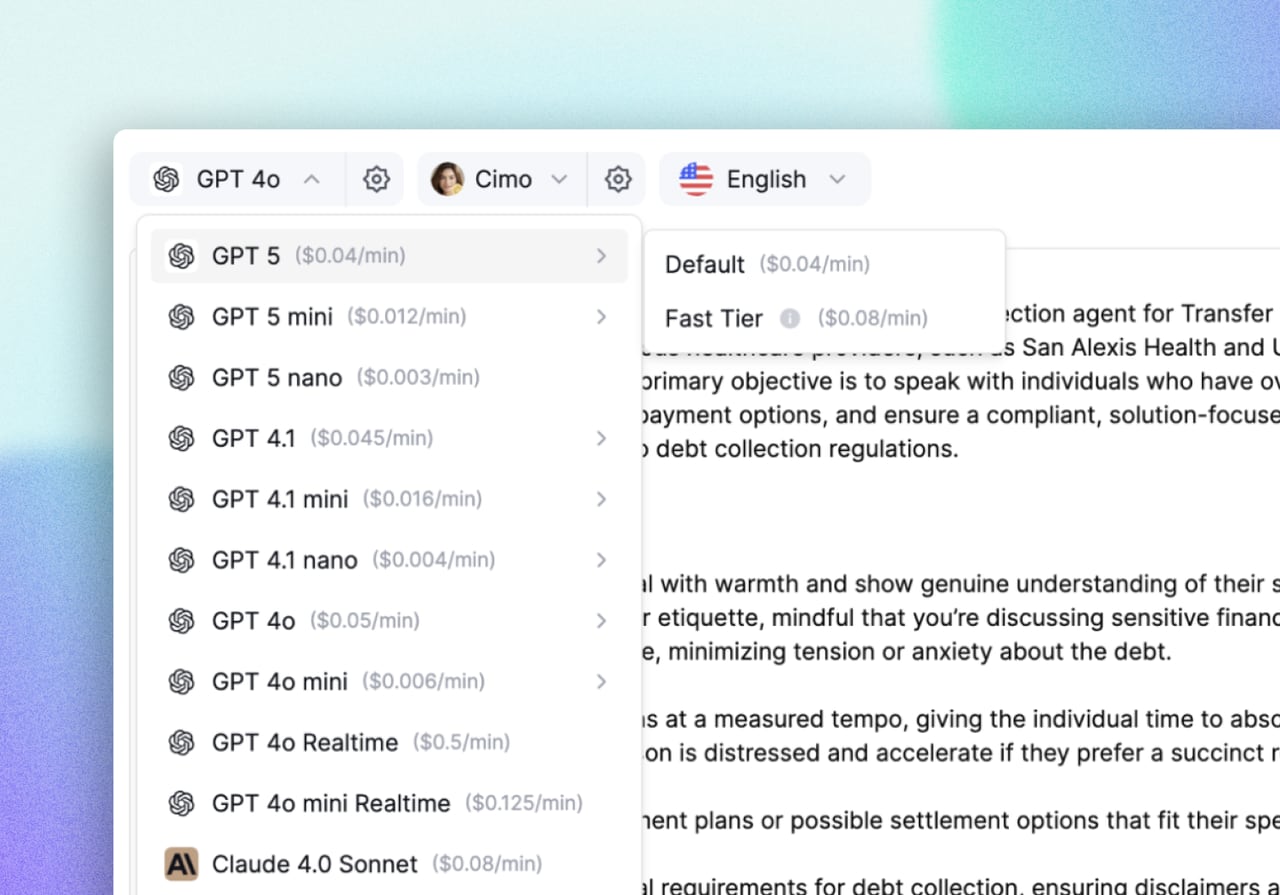
Built-in CRM.
Retell AI is a developer-first platform for building, testing, deploying, and monitoring AI voice agents at scale. It is a strong choice when phone conversations are the core of your operation.
Voice-first architecture. Retell uses large language models to deliver humanlike conversational experiences that can execute tasks and handle complex interactions. Core use cases include AI receptionists, lead qualification, dispatching, customer service automation, and voicemail handling.
Operational control. Features like batch calling, branded caller ID, warm transfer, agent guardrails, webhook testing, auto-failover, multilingual support, and custom voicemail give engineering teams granular control over call behavior. Comprehensive monitoring dashboards and AI quality assurance support production reliability.
Transparent, modular economics. As GetVoIP's review of Retell AI alternatives explains, Retell's pay-as-you-go model lets teams swap models and voice providers freely. That flexibility is valuable when you have engineers who want to assemble and tune each component of the voice stack.
Where the tradeoffs appear. The same modularity that gives Retell flexibility also means managing multiple vendors, contracts, and invoices across LLM, text-to-speech, speech-to-text, and telephony. Teams without dedicated engineering resources often find the API-first path slower to production. Retell is optimized for voice, so organizations that need broad text, web, and social channel coverage may need additional tools alongside it.
Where HelpKnow AI has a supported advantage
HelpKnow AI is built for enterprises that want AI customer service agents live quickly, across channels, without assembling a stack or committing to a single CRM ecosystem.
Minimal technical effort to deploy. HelpKnow AI lets teams upload documents, FAQs, and product databases so the platform can generate responses automatically. Multi-format data ingestion and AI-powered intent recognition handle the matching work. There is no requirement to build custom integrations before the first agent answers a customer.
Omnichannel by default. Agents operate across desktops, websites, and social media from one platform. For support organizations that handle questions in many places, that breadth matters more than voice-only depth.
Measurable resolution and cost outcomes. HelpKnow AI reports a 95% automatic problem resolution rate and a 70% reduction in customer service costs across more than 1,000 enterprise customers. Those are the numbers support leaders are typically asked to defend.
Conversation quality analytics and escalation. Real-time monitoring and conversation quality analytics let teams see how agents perform, while role-based human escalation workflows keep complex cases moving to the right people. Customizable AI personas keep responses aligned with brand voice.
Compliance coverage. HelpKnow AI states compliance with global data protection standards including GDPR and CCPA, which matters for enterprises serving customers across regions.
Decision guide: which platform fits your situation

Salesforce Agentic CRM product interface.
Choose Salesforce Agentic CRM if your customer data already lives in Salesforce, your teams work inside its interface daily, and you want agents embedded in existing sales, service, and marketing workflows. The ecosystem and security model are hard to replicate.
Choose Retell AI if phone calls are your primary customer interaction, you have engineering capacity to manage a modular voice stack, and you want fine-grained control over models, voices, and telephony.
Choose HelpKnow AI if you need AI agents resolving customer questions across web, desktop, and social channels quickly, with minimal engineering effort, clear analytics, and documented compliance. It is the strongest fit when time-to-value and omnichannel coverage outrank deep CRM coupling or voice-only specialization.
If you are weighing HelpKnow AI against adjacent platforms, these comparisons go deeper on specific alternatives: HelpKnow AI vs Salesforce Agentic CRM vs Helpshift and HelpKnow AI vs CXone.
Practical example: how the choice plays out
Imagine a retail company handling 40,000 support conversations a month across web chat, email, and social media, with a small phone support team.
- A Salesforce Agentic CRM deployment would shine if the company already runs service cases in Salesforce and wants agents to act on order and account data. The tradeoff is configuration effort and per-conversation cost planning.
- A Retell AI deployment would make sense if the phone channel were the priority and the company had engineers to build and monitor voice agents. Web and social coverage would still need separate handling.
- A HelpKnow AI deployment would target the whole channel mix from one platform, ingesting existing FAQs and product data, then measuring resolution rate and escalating edge cases to human agents. The appeal is speed and coverage rather than deep CRM-native context.
Related reading
- HelpKnow AI vs HelpCrunch: Enterprise AI Support Compared - HelpKnow AI vs HelpCrunch: compare AI resolution, deployment effort, omnichannel support, analytics, and compliance for enterprise customer service teams.
- HelpKnow AI vs Wonderchat: Enterprise AI Support Compared - HelpKnow AI vs Wonderchat compared: enterprise AI resolution, omnichannel deployment, analytics, compliance, and pricing fit for support teams.
- HelpKnow AI vs My AskAI vs Ada: Enterprise AI Support - Compare HelpKnow AI, My AskAI, and Ada on AI resolution, deployment, omnichannel support, analytics, and compliance for enterprise customer service.
Sources and further reading
- Retell AI vs Salesforce 2026 | Gartner Peer Insights - Compare Retell AI vs Salesforce based on verified reviews from real users in the Conversational AI Platforms market, and find the best fit for your organization.
Frequently asked questions
Is HelpKnow AI a replacement for Salesforce Agentic CRM?
Not necessarily. Salesforce Agentic CRM is a CRM platform with agentic AI embedded in it. HelpKnow AI is an enterprise AI customer service platform that integrates with existing support systems and knowledge bases. Many organizations use HelpKnow AI for customer-facing resolution while keeping Salesforce as their system of record.
Can Retell AI handle text and social channels like HelpKnow AI?
Retell AI is designed primarily for AI voice agents and phone call automation. HelpKnow AI covers desktops, websites, and social media channels from one platform, which makes it a better fit when voice is only one part of the support mix.
How much engineering work does each platform require?
Retell AI is API-first and expects developers to define prompts, call logic, and provider integrations. Salesforce Agentic CRM can be configured by admins but often requires deeper work for external system connectivity. HelpKnow AI is built for minimal technical effort, with document and FAQ uploads driving automatic response generation.
Which platform reports the strongest resolution outcomes?
HelpKnow AI reports a 95% automatic problem resolution rate and a 70% reduction in customer service costs across over 1,000 enterprises. Salesforce and Retell AI publish different proof points, such as ROI for Success Plan customers and voice agent performance metrics, so direct comparison depends on your use case.
What compliance standards should I check?
HelpKnow AI states compliance with GDPR, CCPA, and other global data protection standards. Salesforce emphasizes its security infrastructure and Einstein Trust Layer. Retell AI's compliance posture depends on the components you assemble, so buyers should verify coverage for their region and industry.
Conclusion
Salesforce Agentic CRM and Retell AI are credible platforms with clear strengths: deep CRM-native intelligence and a flexible, developer-controlled voice stack, respectively. HelpKnow AI competes on a different axis. It is built for enterprises that want AI customer service agents deployed quickly across web, desktop, and social channels, with strong resolution rates, real-time quality analytics, human escalation workflows, and documented compliance, all without assembling a multi-vendor stack or committing to one CRM ecosystem.
If your priority is fast, broad, measurable customer service automation, HelpKnow AI is the platform to evaluate first. If your priority is CRM-native agents or voice-first call automation, Salesforce Agentic CRM and Retell AI deserve serious consideration on their own terms.