
HelpKnow AI vs IBM watsonx vs EasyAgent: Which AI Platform Fits Your Support Team?
Choosing an AI platform for customer service in 2026 is less about which model is smartest and more about which platform fits how your team actually works. IBM watsonx is a broad enterprise AI suite built for governance and custom model work. EasyAgent is a no-code agent builder aimed at quick automation at a low entry price. HelpKnow AI is a customer service platform focused on deploying support agents fast, across channels, with measurable resolution rates.
This comparison looks at where each platform is strong, where it asks more of your team, and which scenarios point to which choice.
Quick comparison at a glance
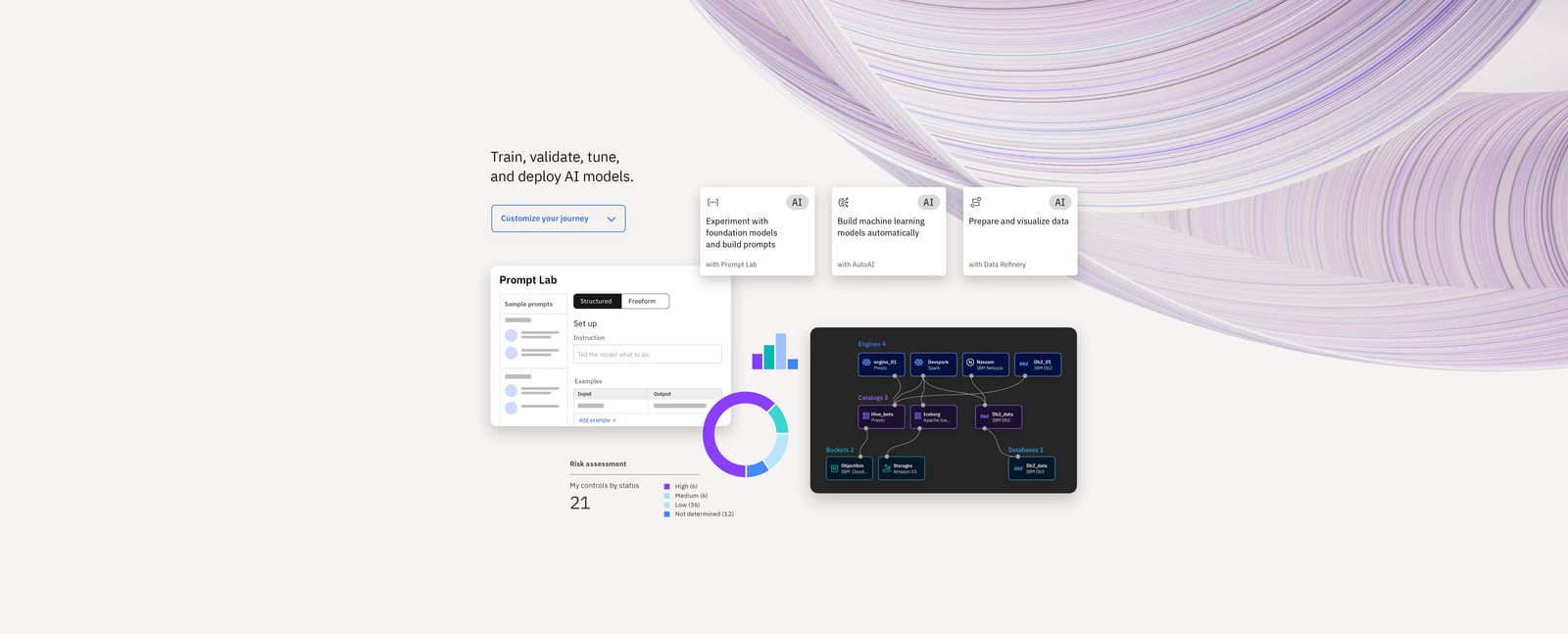
IBM watsonx product interface.
| Criteria | HelpKnow AI | IBM watsonx | EasyAgent |
|---|---|---|---|
| Primary focus | Enterprise AI customer service agents | Full enterprise AI platform (models, data, governance, automation) | No-code AI agent builder for many workflows |
| Typical builder | Support and CX teams with light technical help | Data scientists, AI engineers, platform teams | Individuals, small teams, non-technical operators |
| Time to first working agent | Fast: upload documents, FAQs, and product data | Longer: requires model, data, and governance setup | Fast for simple agents; more work for complex support logic |
| Omnichannel customer support | Desktop, website, and social channels built in | Possible through watsonx Assistant and custom builds | Possible via integrations and custom APIs |
| Conversation analytics | Real-time monitoring and quality analytics | Governance and model monitoring focus | Workflow-level monitoring; less CX-specific depth |
| Human escalation | Role-based escalation workflows | Configurable through orchestration and custom logic | Configurable via workflow steps |
| Compliance posture | GDPR, CCPA, and other global standards | Strong AI governance and GRC integration | Encrypted keys and role-based access control |
| Best fit | Support teams that want fast, measurable automation | Regulated enterprises building AI at scale | Budget-conscious teams automating many task types |
Where HelpKnow AI is strongest

IBM watsonx product interface.
HelpKnow AI is built specifically for customer service, so its advantages show up in the parts of support work that are hardest to get right: knowledge ingestion, channel coverage, and proving that automation actually resolves problems.
Fast deployment from existing knowledge
Support teams rarely start from a blank page. They already have help center articles, FAQs, product databases, and internal documents. HelpKnow AI ingests multiple data formats and turns that material into automatic responses, so the first version of an agent reflects what the business already knows rather than what someone can rebuild from scratch.
That matters because the slowest part of most AI support projects is not model selection. It is getting accurate, brand-appropriate answers out of scattered documentation.
Omnichannel coverage without separate builds
Customers ask questions on websites, desktops, and social media. HelpKnow AI supports omni-channel integration across those surfaces, so a support team does not need to maintain a different agent for each channel. Intent recognition then matches incoming queries to the right answer, which reduces the volume of near-duplicate questions that reach human agents.
Analytics tied to support outcomes
HelpKnow AI includes conversation quality analytics with real-time monitoring. For support leaders, this is the difference between knowing an agent exists and knowing whether it is working. Reported outcomes across its enterprise base include a 70% reduction in customer service costs and a 95% automatic problem resolution rate, which are the kinds of numbers support leaders are asked to defend in budget reviews.
Escalation that respects roles
Not every question should be answered by an AI agent. HelpKnow AI supports role-based human escalation workflows, so conversations move to the right person with context instead of dropping into a generic queue. Customizable AI personas also let the agent match the brand voice rather than sounding like a generic assistant.
For teams comparing this approach against other support-first platforms, the HelpKnow AI vs eGain vs Udesk comparison covers similar criteria in more depth.
Where IBM watsonx is strongest
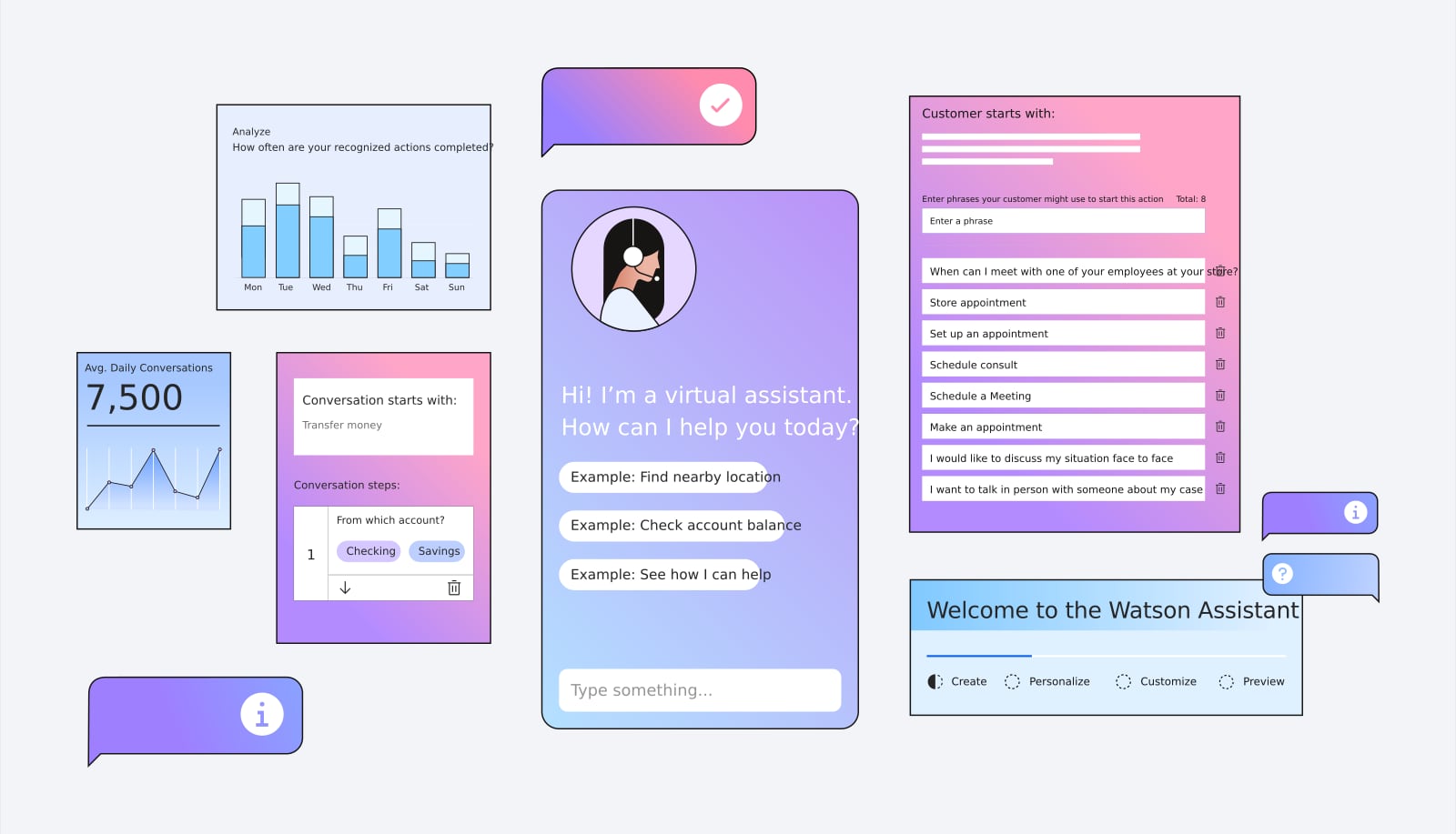
IBM watsonx product interface.
IBM watsonx is a genuinely different category of product. It is an enterprise AI platform rather than a customer service tool, and it is credible precisely because it does not pretend otherwise.
Governance and regulated-industry fit
watsonx.governance is designed to manage AI models across their lifecycle, with governance, risk, and compliance integration. For financial services, healthcare, and other regulated sectors, that capability is often a hard requirement rather than a nice-to-have. Enterprises that must document how a model was trained, tuned, and monitored will find a mature story here.
Data management at enterprise scale
watsonx.data provides a hybrid, open data lakehouse that unifies data access. Organizations with data spread across on-premises systems and multiple clouds can build AI on top of a governed data layer instead of copying data into yet another silo.
Model flexibility and hybrid deployment
watsonx.ai supports model training and tuning, and the platform emphasizes openness and hybrid deployment. Teams with machine learning engineers who want to fine-tune models or run workloads in specific environments will find more control than a packaged support product offers.
Workflow automation through watsonx Orchestrate
watsonx Orchestrate extends the platform into task and workflow automation, which is how many enterprises connect AI to back-office processes beyond the contact center.
The trade-off is real: watsonx assumes you have the engineering and data resources to operate it. A support team looking for a working agent next month is not the same buyer as a platform team building an AI foundation for the next several years. A broader look at how it stacks up against support-focused tools appears in the HelpKnow AI vs IBM watsonx vs CoSupport AI comparison.
Where EasyAgent is strongest
EasyAgent competes on accessibility, and it does that part well.
Low-cost entry and fast setup
Plans starting around $10 per month, a free trial, and a no-code builder mean a solo operator or small team can deploy an agent in minutes. That is a meaningfully lower barrier than either enterprise platform in this comparison.
Model choice across providers
EasyAgent supports multiple AI providers, including OpenAI, Claude, Gemini, Azure, and Grok. Teams that want to route different agents to different models, or avoid depending on a single vendor, get flexibility that packaged platforms typically do not offer.
Broad workflow automation beyond support
EasyAgent is not limited to customer service. It handles research, content creation, data analysis, email, and lead generation, and it integrates with tools like Slack, Asana, Google Sheets, Notion, and custom APIs. For a small business that wants one automation layer across many tasks, that breadth is efficient.
Practical context handling
Retrieval-Augmented Generation (RAG) support gives agents deeper context from your own material, and agent personality training helps shape tone. Security features include encrypted keys and role-based access control, which covers the basics for small and mid-sized deployments.
The limitation is depth in support-specific operations. Conversation quality analytics, omnichannel customer experience management, and structured escalation workflows are areas where a dedicated customer service platform goes further.
How to choose between them

IBM watsonx product interface.
The decision usually comes down to three questions.
What is your primary job to be done? If the goal is automating customer service conversations and proving resolution rates, a support-focused platform is the shorter path. If the goal is building an AI foundation across many business functions with governance requirements, an enterprise AI platform is the better fit. If the goal is automating a wide range of small tasks cheaply, a no-code builder wins on cost.
Who will operate the platform? HelpKnow AI is designed for support teams with minimal technical effort. IBM watsonx assumes data scientists and AI builders. EasyAgent assumes a non-technical operator who is comfortable assembling workflows.
What compliance evidence do you need? Regulated enterprises often need lifecycle governance and GRC integration, which is watsonx territory. Support organizations that need data protection compliance with standards such as GDPR and CCPA can meet that requirement with HelpKnow AI. EasyAgent provides encrypted keys and RBAC, which suits smaller-scale deployments.
A useful rule of thumb: choose the platform whose default assumptions match your team, then verify the gaps rather than assuming you will close them later.
Related reading
- HelpKnow AI vs My AskAI vs Crescendo: 2026 Comparison - Compare HelpKnow AI, My AskAI, and Crescendo on AI resolution, deployment effort, omnichannel support, analytics, and compliance for support teams.
- HelpKnow AI vs Nextiva vs Tidio: 2026 Comparison Guide - Compare HelpKnow AI, Nextiva, and Tidio on AI resolution, deployment, omnichannel support, analytics, and compliance for enterprise support teams.
Sources and further reading
- What’s the Best AI Assistant? A Full Comparison - AI assistants are transforming the way organizations manage support, streamline workflows, and deliver better user experiences. But not all AI assistants are created equal. Some are built for large enterprises with deep budgets, others for customer-facing omnichannel support, and some for technical teams with heavy customization needs.
- Best Enterprise AI Agent Platforms in 2026: Top Solutions Ranked - Compare the top 10 enterprise AI agent platforms in 2026 — Microsoft Copilot Studio, Salesforce Agentforce, ServiceNow, IBM watsonx, and more. Find the right platform for your organization\
Frequently asked questions
Is IBM watsonx a direct replacement for a customer service AI platform?
Not exactly. watsonx is an enterprise AI platform covering model development, data management, governance, and automation. It can support customer-facing conversational AI, particularly through watsonx Assistant and Orchestrate, but it is built for organizations with the engineering resources to assemble and govern those capabilities.
Can EasyAgent handle enterprise customer support?
EasyAgent can automate customer service workflows and supports RAG, integrations, and role-based access control. It is best suited to small and mid-sized operations or teams automating many task types. Enterprises with high conversation volumes and strict support analytics requirements typically need deeper CX-specific tooling.
What makes HelpKnow AI different from a general AI agent builder?
HelpKnow AI is purpose-built for customer service. Multi-format knowledge ingestion, intent recognition, omnichannel integration, conversation quality analytics, and role-based escalation are core features rather than things you configure from scratch.
How long does deployment take for each platform?
EasyAgent and HelpKnow AI both emphasize fast setup, with HelpKnow AI focused on turning existing documents and FAQs into working agents. IBM watsonx deployments generally take longer because they involve model, data, and governance configuration.
Which platform is best for regulated industries?
IBM watsonx has the strongest native governance story through watsonx.governance and GRC integration. HelpKnow AI addresses data protection compliance with global standards including GDPR and CCPA, which covers many support use cases. The right answer depends on whether your regulator expects model lifecycle documentation specifically.
Conclusion
These three platforms are not really competing for the same buyer. IBM watsonx is the choice for enterprises that need governed, hybrid AI infrastructure and have the teams to run it. EasyAgent is the choice for individuals and small teams that want broad automation at a low price. HelpKnow AI is the choice for support organizations that want a working customer service agent quickly, across channels, with analytics that show whether it is resolving problems.
If your priority is measurable customer service outcomes rather than AI infrastructure, start by mapping your existing knowledge base and channel mix, then evaluate how quickly each platform turns that material into resolved conversations. For a wider view of support-focused alternatives, the HelpKnow AI vs Botpress vs Five9 comparison covers similar evaluation criteria.